Skip to 5:14 to watch the specific commercial I am discussing.
Advertisements are the fabric of today’s digital world. Billboards, Television, and YouTube are just a few of the countless ways that people are advertised to on a daily basis. Advertisements are designed to make people have a certain response depending on the approach that they take. It is important for people to understand advertisements role in the world and how it going to affect people in the future. It is also interesting to see how advertisements have changed over the years. Many old radio programs might have been sponsored by just one advertisement such as the Ovaltine hour, which can be seen in the popular movie Annie. In today’s world, the idea has shifted to getting out the most amount of advertisements in the quickest time. It costs millions just to get a 30 second slot on the Superbowl commercial line-up. Whether it be the products or the method of delivery, they don’t make advertisements like they used to.
During the Golden Age of radio and the early years of television, cigarette advertisements were incredibly common and important to many people. Before people began listening to sound science that proved how deadly cigarettes were, it was a huge market. Many of the biggest stars would put out advertisements for these brands which started the significant rise in sales. One of the most notable shows, I Love Lucy, was instrumental in the start of television and family sitcoms. When a big celebrity like Lucille Ball tells a person to do something, they are more than likely to do it.
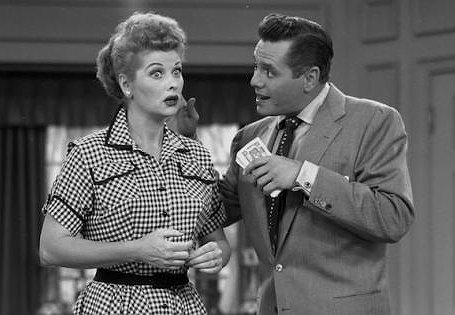
So, when the show partnered with Philip Morris to advertise their cigarettes people took notice. Philip Morris is an extremely well-known cigarette brand who today owns well known brands like Marlboro. Back in the radio days, Philip Morris was a household name. Johnny Roventini was the voice and later the face of the brand and as Robert Thomas Notes in his New York Times article “Mr. Roventini’s was one of the most recognizable voices in the land. And with the picture of the little man in his bright red, gold-trimmed uniform plastered in store windows and in magazine ads he was one of the nation’s most recognizable figures (1).” Due to these advertisements, cigarette smoking was the thing to do and most of Hollywood’s biggest names were smoking. Once science determined the dangers of cigarette smoking, these ads stopped and many of the stars died from smoking related illnesses. However, taking a deeper look into Philip Morris’s brand and commercial it can be easily seen that they got their message across and perfectly targeted their audience.

People may wonder how something so dangerous could be so widely accepted. Stuart Elliot discusses this in his article When Doctors, and Even Santa, Endorsed Tobacco. Elliot notes how “Other approaches that could cause double takes (if not whiplash) among contemporary consumers include ads featuring Santa Claus, for brands like Pall Mall; senators like Charles Curtis of Kansas, who endorsed Lucky Strike before he was elected vice president in 1928; cartoon characters like the Flintstones and penguins, for brands like Winston and Kool; children, who appear as accessories for their smoking parents; and babies, for brands like Marlboro (2).” The put the right people into the advertisements so that anyone of any age would be able to relate and want to purchase their products. Before Google, people were not going out of their way to look up the information so if someone told them that something was accurate, they went along with it.
The specific commercial of my focus was filmed in black and white and uses the classic characters Desi and Lucy. It is in a PSA (Public Service Announcement) format and is trying to sell to audiences that Philip Morris is a cigarette brand that is not going to cause irritation unlike other brands. It was interesting the first few times I watched it, because in this time period, color was never used in television. They had to rely on other elements and pieces to get their point across. Beginning with the lovable and well-known characters of Desi and Lucy makes it an instant hit, especially since they are in animated format. They took the already beloved characters and made them into cute cartoons to capture attention. It also uses big and bold letters in varying font sizes and styles during the scrolling announcement to make it look important and keeps it eye-catching. People are glued to the screen and want to see what is going to come up. This advertisement and ones like it, pander to wide audiences and keep them interested in the product being sold.
No element of a commercial or advertisement is there by chance. Advertisers are smart and use a variety of different tactics to get their point across. Whether it be subliminal and embedded into something or right in a person’s face, advertisements have been and always be just around the corner. Taewon Suh notes in her article on visual persuasion that “It is mental imagery, not the visual image itself as stimulus, that makes an interpretation immediate, non-linear, and intuitive (6).” Philip Morris ads began on the radio and then moved to television. This was not a new product and people had already been flooded with these ads during radio programming. They already had the sound of the bellhop in their head and knew exactly what the product was and what it did. Adding in the celebrities and other features was just a way to help increase and spice up the visuals and the sales. They already had a large group of people who were smokers, so they just wanted to add to the group.
This presented a small challenge though, as people had the mental image in their head of what the commercial would look like based on the voice that had taken over the radio. Thankfully, brands were able to think quickly and had tactics that kept their brands at the forefront of advertising and sales. Berger discusses the Idea of Publicity in his book Ways of Seeing. He highlights how “Publicity persuades us of such a transformation by showing us people who have apparently been transformed and are, as a result, enviable. The state of being envied is what constitutes glamour. And publicity is the process of manufacturing glamour (131).” Using the big named celebrities made people want to buy the items because they feel like it is going to make them better for using it. If it made celebrities so happy and supposedly transformed, then what can it do for them. This is the main idea of advertisements no matter what time or place they are from.
Advertisers are all in the same game, to sell their product. Whatever the method or the idea, they are all after the same direct goal. With the digital age, people have the pleasure of being drowned in advertisements more than ever in history. A person cannot turn on the TV or use the internet without being overwhelmed by these advertisements. Advertisements have changed overtime and a person may never see a Philip Morris ad like it was in 1950. However, it seems year after year companies’ advertisements strategies are getting stronger and more efficient and it seems we are even being advertised to subconsciously. It is important to remain an informed consumer and understand advertisements place in an ever growing and advancing technological world.
References:
Thomas, Robert. Johnny Roventini, 86 Bellhop who called for Philip Morris. New York Times, 1998.
Elliot, Stuart. When Doctors, and Even Santa, Endorsed Tobacco. New York Times, 2008.
Suh, Taewon. Visual Persuasion. Communication research trends, 1999.
Berger, John Ways of Seeing. Penguin, 1977.
 Katie's communication blog